Shop › Guides
Moose attractant: why it doesn't last, and how to keep it working
RutDrift guide · Moose, deer and bear hunting
A moose in rut can travel dozens of kilometres in one night looking for a cow. Why would he stop on your ground? Because it smells, and it still smells when he walks by. You invested in a quality attractant; what is almost always missing is the right way to give it off. Here is what makes it disappear, and what keeps it working.
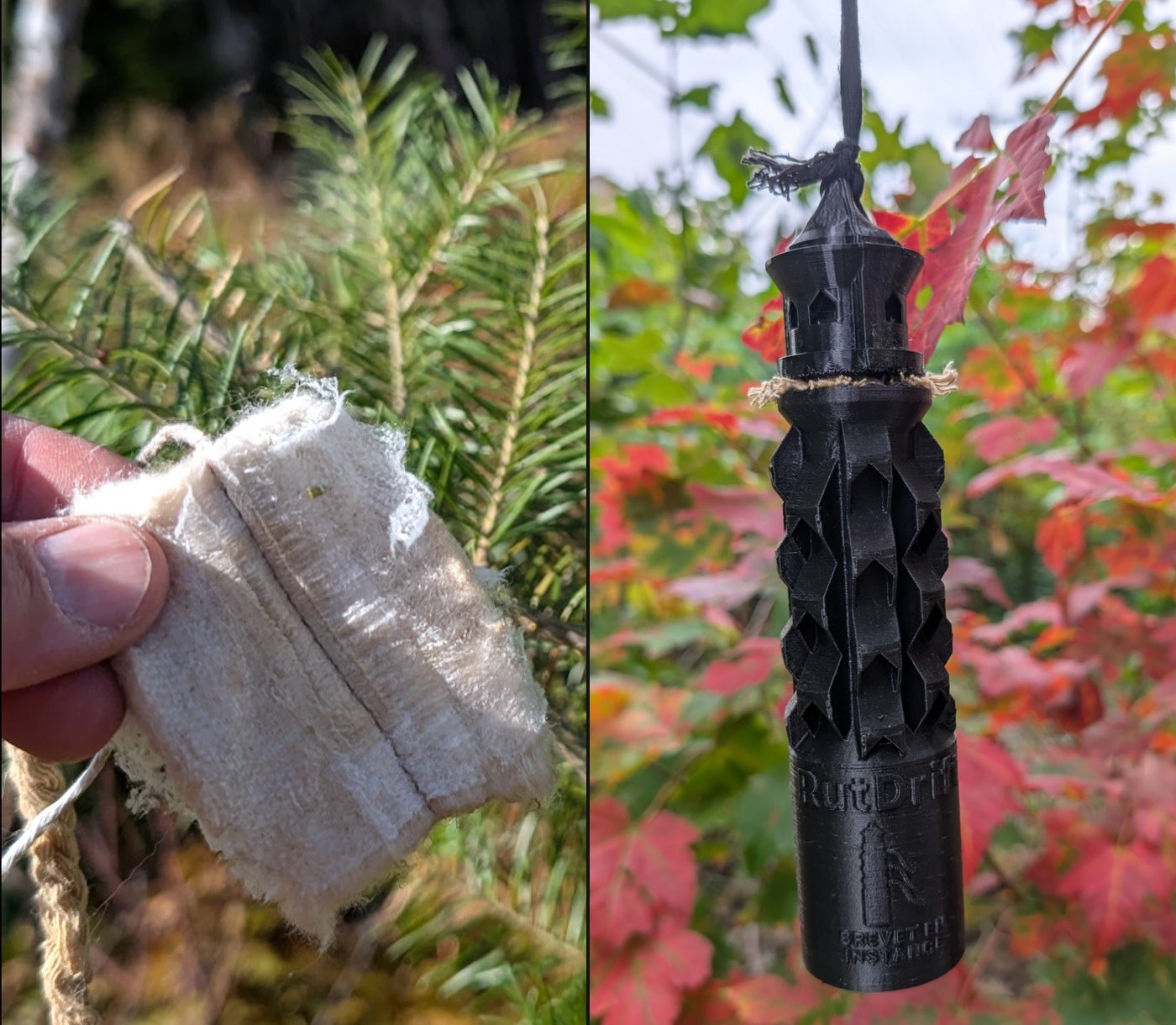
In the sun, a tampon is dry within hours
The most common setup in the woods is a soaked tampon hung from a branch. It has no reservoir: it only holds what you poured on it. The flow peaks in the first hour, then collapses. In the sun, almost everything is gone within a few hours, during the day. At night, when the moose is moving, nothing is left.
Heat does something else. The synthetic pheromones now added to attractants are fine, highly volatile molecules: the sun drives them off first and breaks them down faster. That is why manufacturers tell you to keep their products tightly closed, cool and out of the light.
Rain and dew dilute it, then wash it away
Hanging in the open, a tampon soaks up everything wet: rain, morning dew, even the humidity in the air. In a hard rain it fills with water and swells to its full size. Your attractant is first diluted, then washed down to the ground. One good downpour ends the setup.
Re-soaking it morning and evening leaves your scent on the site
To keep the site smelling, you have to re-arm the tampon: soak it again every morning and every evening. You handle a strong-smelling product several times a day, in the middle of the season, and every visit leaves your own scent on the site. Exactly what you wanted to avoid.
The holder itself adds a scent
A tampon is not made for the woods: bleached fibre, often a synthetic cover around the core and a waxed string. Store-bought sponges and dipping wicks often add a perfume or an antibacterial. To a nose that reads a scent trail more than a kilometre away, that is one more foreign smell. The same goes for the container: a bottle that smells of rubber or hot plastic gets noticed before your attractant does.
What works instead: a reservoir, wicks and air
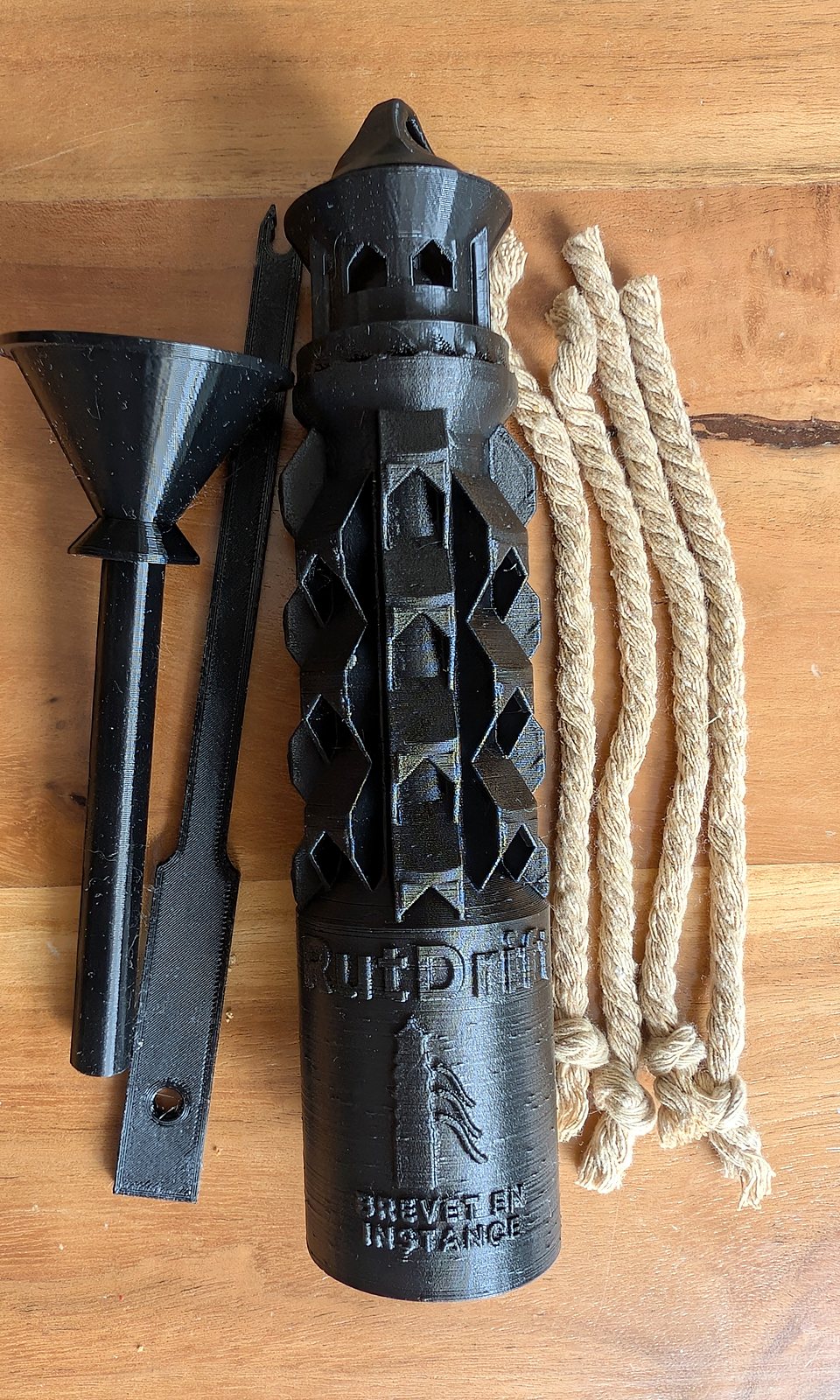
- A sheltered reservoir. The attractant stays dry, protected from rain and dew, instead of being fully exposed from the first minute.
- Wicks that draw it up gradually. By capillary action, the liquid rises from the reservoir and meets the wind a little at a time, over several days, instead of evaporating all at once in the first sun.
- Air gets through, rain does not. Slots sheltered under hoods let the wind cross and send the rain back out.
- A chimney for calm days. In the sun, warm air rises and leaves through the top, drawing fresh air in at the bottom: the scent gets out even without wind.
- A container that smells of nothing. No glue, no rubber, nothing that adds its own smell to yours.
That is RutDrift's design brief: see how it works.
Where and when to set it up
- Ideally before you arrive. The area should already smell when you settle in. If not, do it on the first day.
- At shoulder height, on the prevailing-wind side. Hang the bottle from a branch, 1.5 to 2 m off the ground.
- Several points along a trail, at the edge of the territory. That is the setup we used in the Saint-Maurice wildlife reserve, where a bull stayed on the territory instead of passing through.
- Let it work on its own. Fewer visits, less of your scent. To check where you stand, walk up: smell it, then heft it. If it still feels heavy, there is attractant left in the reservoir. How long a fill lasts depends on the weather: sun, heat, wind and humidity.
 *1